Step Into the Trees: How Shinrin-Yoku Is Quietly Transforming American Wellness
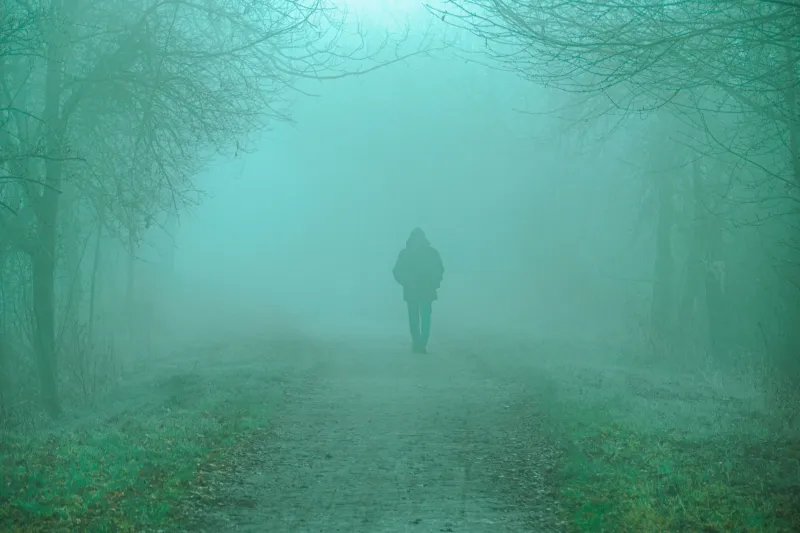
There's a moment that happens to almost everyone who tries it for the first time. You're standing in the middle of a forest — maybe it's a state park in Vermont, maybe it's a redwood grove outside of Santa Cruz — and you realize you haven't checked your phone in 45 minutes. Your shoulders have dropped about three inches. Your breath has slowed. The noise in your head has gone somewhere else.
That moment? That's shinrin-yoku doing its thing.
The Japanese term translates roughly to "forest bathing," and before you picture anyone actually scrubbing down between the oaks, let's clear that up: this is about immersion, not hygiene. It's the practice of spending slow, deliberate, sensory-focused time among trees. No fitness goals. No step counts. Just you, the woods, and whatever happens when you let yourself be still inside something ancient and alive.
And Americans? We are hungry for it.
From Tokyo to the Trailhead: A Brief History
Japan's Forestry Agency introduced shinrin-yoku as a public health initiative back in 1982, partly as a response to the country's skyrocketing rates of stress-related illness. Researchers spent decades studying what happened to the human body when it spent time in forested environments — and what they found was striking enough to reshape Japan's entire approach to preventive healthcare.
The practice made its way into American wellness circles slowly at first, mostly through academic papers and a handful of early adopters in the integrative medicine world. But in the last five or six years, something shifted. Burnout culture hit a wall. The pandemic cracked open a new appreciation for outdoor space. And suddenly, "go touch grass" stopped being an insult and started sounding like actual medical advice.
The Association of Nature and Forest Therapy, based in California, now certifies guides across all 50 states. Retreat centers from the Appalachians to the Pacific Northwest have built entire programming around the practice. It's no longer fringe — it's becoming a genuine movement.
What's Actually Happening in Your Body
Here's where it gets genuinely fascinating. Trees release organic compounds called phytoncides — essentially the chemicals that give forests their smell. When you breathe them in, your body responds in measurable ways. Studies out of Japan and South Korea have shown that forest environments increase the activity of natural killer (NK) cells, which are part of your immune system's front line against illness. One study found that a single two-hour forest walk boosted NK cell activity by more than 50 percent, with effects lasting for days afterward.
On the stress side, time among trees has been linked to lower cortisol levels, reduced blood pressure, and slower heart rates. A growing body of research also points to improvements in mood, focus, and even creativity after forest immersion sessions. Dr. Qing Li, one of the world's leading researchers in forest medicine, has spent years documenting these effects and argues that regular forest time could significantly reduce rates of depression and anxiety in urban populations.
None of this requires a marathon. A 20-minute walk at a gentle pace — phones off, senses open — is enough to start shifting your physiology.
Real People, Real Roots
Marissa, a 34-year-old project manager from Chicago, started forest bathing after her therapist suggested she find something that didn't involve a screen or a schedule. "I thought it sounded a little woo-woo, honestly," she admits. "But I drove out to Starved Rock State Park one Saturday morning, left my earbuds in the car, and just... walked slowly. I cried twice and I have no idea why. I felt better than I had in months."
She now goes twice a month, year-round. "Winter is actually my favorite. The woods are quieter. You hear things you never hear otherwise."
Out in Portland, Oregon, a group of friends started a casual forest bathing club two years ago that now draws 15 to 20 people on weekend mornings. "We don't call it a hiking group because it's not," says co-organizer Darnell, 41. "We move slowly. We sit a lot. Sometimes we don't talk for 30 minutes at a stretch. People think it'll be boring and then they show up and they don't want to leave."
Finding Your Forest: A Beginner's Guide by Region
One of the best things about forest bathing is that it doesn't require a plane ticket or a permit. Here's how to get started depending on where you live:
Northeast: New England is practically built for this. Try the White Mountain National Forest in New Hampshire, Catskill Park in New York, or even smaller county forests in Pennsylvania and Connecticut. Look for old-growth stands where the canopy is dense and the underbrush is minimal.
Southeast: The Great Smoky Mountains National Park straddles the Tennessee-North Carolina border and offers some of the most biodiverse forest in North America. Florida's Ocala National Forest and Georgia's Chattahoochee-Oconee National Forests are also excellent, less-crowded options.
Midwest: Don't sleep on the Midwest for this. Michigan's Upper Peninsula has stunning boreal forest. Indiana Dunes National Park has wooded areas that often go overlooked. Minnesota's Boundary Waters region is world-class.
Southwest & Mountain West: Colorado's San Juan National Forest, Arizona's Coconino National Forest (especially the ponderosa pine zones), and New Mexico's Santa Fe National Forest all offer dramatic, high-elevation forest environments.
Pacific Coast: This is the motherload. Northern California's Muir Woods, the Hoh Rain Forest in Washington's Olympic National Park, and virtually any stretch of Oregon's Coast Range will do exactly what you need.
Wherever you go: leave the headphones. Arrive without a destination. Touch the bark. Sit on the ground. Look up more than you look forward.
The Gym Isn't Going Anywhere — But Neither Are the Trees
To be clear, nobody's saying you need to cancel your gym membership. Physical fitness matters, and forest bathing isn't really a workout in the traditional sense. But what it offers is something that no amount of cardio can replicate: a genuine reconnection to the natural world, to slowness, to your own senses.
In a culture that rewards hustle and optimizes everything, choosing to walk slowly through the woods for no measurable reason is almost a radical act. It's a reminder that you are, at the end of the day, a creature that grew up alongside trees. That your nervous system was calibrated in environments like this long before cubicles and commutes existed.
The big trees were here before us. They'll be here after. And right now, they're just waiting for you to show up and breathe.