Alone in the Woods and More Connected Than Ever: Rethinking What Loneliness Actually Means
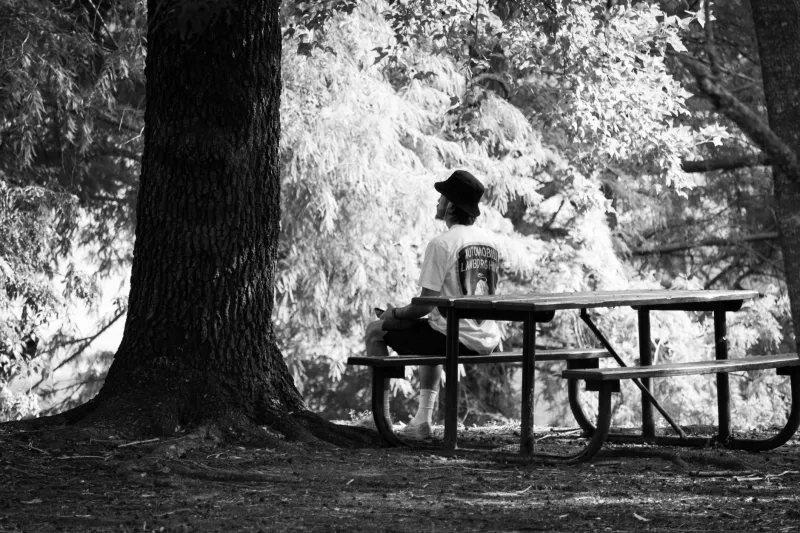
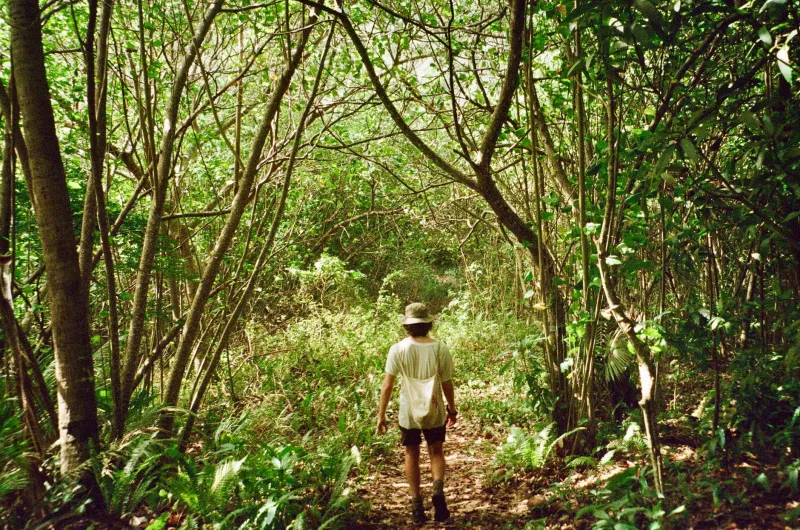
There's a particular kind of quiet you find standing alone among old-growth trees. No notifications. No small talk. Just the creak of branches and the soft percussion of your own heartbeat. For a lot of us, that silence feels terrifying at first — and then, slowly, it starts to feel like something else entirely. Like coming home.
Here's the strange truth: the United States Surgeon General declared loneliness a public health epidemic in 2023, with roughly half of American adults reporting measurable feelings of isolation. And yet we are, by almost every technological measure, the most connected generation in human history. We carry supercomputers in our pockets. We can video-call someone on the other side of the planet in seconds. We have apps specifically designed to help us make friends.
So what gives?
The Noise That Drowns Out Connection
Part of the problem is that we've confused access with intimacy. Scrolling through someone's highlight reel on Instagram isn't the same as sitting across from them at a kitchen table. Dropping a reaction emoji on a post isn't the same as showing up when things fall apart. We've built faster roads between people, but somewhere along the way we forgot to actually make the trip.
Researchers at the American Psychological Association have noted that the quality of social interaction matters far more than the quantity. A hundred shallow exchanges leave you feeling emptier than one honest conversation. We're overstimulated and underloved, if that makes any sense — flooded with signals but starved for meaning.
And ironically, the constant noise of digital life has made it harder to develop the one skill that genuine connection actually requires: the ability to be present with yourself.
What the Forest Already Figured Out
Spend some time studying how trees actually live, and you start to see the loneliness epidemic differently.
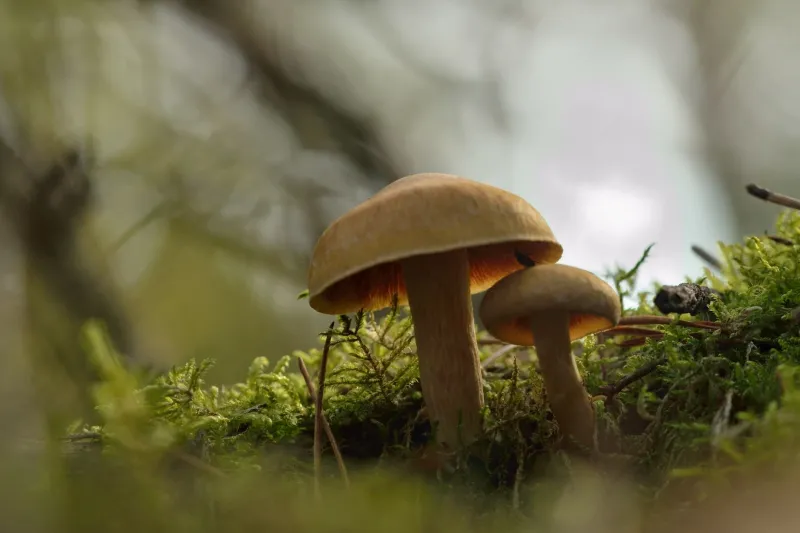
A mature oak standing alone in a field looks solitary. It is solitary, in a sense — it occupies its own space, casts its own shade, grows according to its own internal logic. But underground, it's almost certainly woven into a vast fungal network, trading nutrients and chemical signals with neighboring trees, sometimes over distances of acres. Scientists call this the mycorrhizal network. Poets call it the wood wide web.
Here's what's fascinating: trees that are isolated from these networks — uprooted, transplanted, or growing in sterile soil — are measurably weaker. They're more vulnerable to disease, less resilient in drought, quicker to fall. But the trees that are most deeply connected to the network? They tend to be the ones that have also developed the strongest individual root systems first. The depth of their solitary growth is precisely what makes them valuable partners in the collective.
Solitude and connection, in other words, aren't opposites. They're a cycle.
Why We're Afraid to Be Alone
Modern American culture doesn't make it easy to sit quietly with yourself. We're a productivity-obsessed, extrovert-celebrating, always-on society. Busyness gets worn like a badge of honor. Silence gets mistaken for loneliness. And loneliness gets mistaken for failure.
So we fill the gaps. We doomscroll at 2 a.m. We half-watch television while half-texting while half-eating dinner. We schedule our calendars to the point of suffocation and then wonder why we feel so hollow.
But here's what the research — and honestly, the forest — keeps pointing back to: you cannot offer genuine presence to another person if you have no real relationship with yourself. Solitude isn't the enemy of connection. Chronic avoidance of solitude might be.
Psychologist Ester Buchholz spent decades arguing that the human need for alonetime is just as real and just as valid as the human need for togetherness — and that our cultural neglect of the former is quietly wrecking the latter. When we never let ourselves be still, we never develop the inner landscape that makes us interesting, empathetic, or available to the people around us.
Forest Immersion as a Reset Button
This is one reason why time in nature — genuinely unplugged, unhurried time among trees — has such a surprisingly powerful effect on people's social lives. It sounds counterintuitive. You go alone into the woods and come back better at being with people?
But that's exactly what a growing body of research suggests. Studies from institutions like the University of Michigan and Stanford have found that time in natural environments reduces rumination, lowers cortisol, and quiets the hyperactive self-monitoring that makes social interaction feel exhausting. When your nervous system gets a real break from the constant performance of modern life, you stop being so depleted. And when you're not depleted, you actually have something to give.
There's also something about the forest specifically that recalibrates our sense of scale. Those big trees have been around for decades, sometimes centuries, completely indifferent to your inbox. Standing among them, you tend to stop catastrophizing about whether you came across weird in that text message. The small social anxieties that keep us guarded and performative — that prevent real connection — seem to loosen their grip.
Building Your Own Root System
So what does this actually look like in practice? A few things worth trying:
Start small with solitude. You don't need a week-long wilderness retreat (though, hey, we're not going to talk you out of it). Even thirty minutes of genuinely phone-free time — a walk in a local park, sitting on your porch with coffee, a slow wander through a botanical garden — starts building the muscle. The goal isn't to be alone forever. It's to get comfortable enough with your own company that you stop needing other people to fill a void, and start wanting them because they genuinely add to your life.
Notice the difference between loneliness and solitude. Loneliness is the ache of feeling disconnected despite wanting connection. Solitude is the choice to be with yourself as an act of renewal. The feelings can overlap, but they're not the same thing. Learning to tell them apart is useful.
Invest in fewer, deeper connections. Like the mycorrhizal network, quality beats quantity. Two or three relationships where you can be genuinely honest will do more for your wellbeing than twenty where you're performing a version of yourself.
Take your conversations outside. There's actual science behind the fact that walking side-by-side in a natural setting lowers the social pressure of face-to-face conversation. Some of the most honest talks happen on trails. Try it.
The Paradox Worth Living
The loneliness epidemic is real, and it deserves to be taken seriously. But the solution probably isn't more apps, more group chats, or more curated digital socializing. It might be something quieter and older — the willingness to go still, to sit with yourself in the presence of something larger, and to come back to your people a little more whole.
The big trees figured this out a long time ago. They grow deep on their own, and they reach out when they're ready. Both things are necessary. Both things are natural.
You're allowed to do the same.