Cut More, Grow More: The Counterintuitive Art of Saying No to Good Things
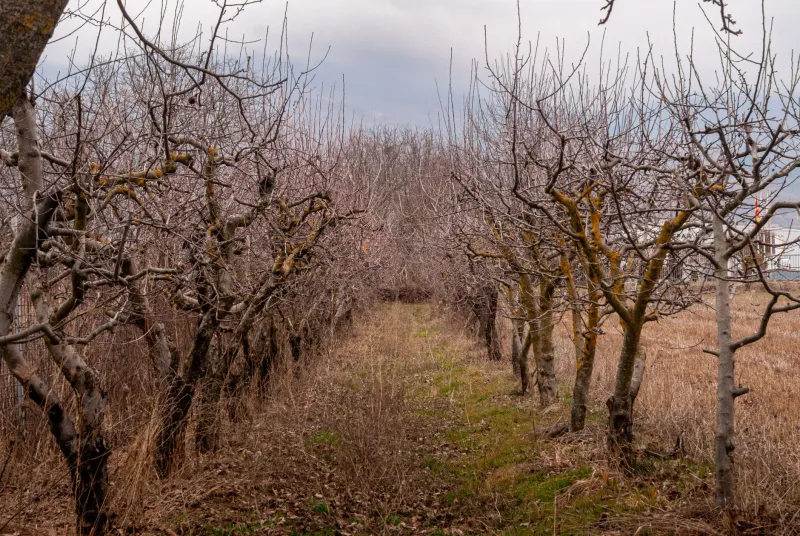
There's a moment every serious orchardist dreads and respects in equal measure. It's late winter, the trees are still bare, and you're standing in the orchard holding a pair of pruning shears. In front of you is a perfectly healthy branch — green wood, good structure, no disease. And you cut it off anyway.
Not because something is wrong with it. Because something is right about the bigger picture.
That tension — removing something good so something extraordinary can grow — is one of the most underappreciated ideas in both horticulture and human life. We talk endlessly about hustle culture, about saying yes, about seizing every open door. But the trees? They've been quietly teaching us the opposite lesson for millions of years.
What Pruning Actually Does (And Why It's Not About Damage Control)
Most people think pruning is what you do when a plant is sick or overgrown. But in professional orcharding and forestry, strategic pruning is applied to healthy trees as a deliberate growth intervention.
Here's the science: every branch on a tree is a competing draw on the tree's total energy budget. Photosynthesis produces a finite amount of sugars, water moves through the vascular system at limited rates, and root systems can only support so much canopy. When a tree is allowed to grow every branch it produces, that energy gets distributed thinly across dozens of competing growth points. The result is a tree that's wide, bushy, and mediocre — producing small fruit, weak wood, and stunted vertical growth.
Remove the right branches, though, and something remarkable happens. The tree's energy — unchanged in total — now flows with intensity through fewer channels. Remaining branches thicken faster. Fruit grows larger. Root systems deepen. The tree doesn't work harder. It works smarter, because you forced it to.
Arborists call this "redirecting apical dominance." You could also call it the biology of focus.
The Good Opportunity Problem
Here's where most of us get tripped up: we're pretty decent at saying no to bad opportunities. We turn down jobs we'd hate, skip events we'd dread, and (usually) avoid commitments that feel obviously wrong.
The hard part is saying no to the good ones.
A side project that's genuinely interesting. A committee seat that would look great on a resume. A friendship that's warm but quietly draining. A freelance gig that pays well but pulls your attention sideways. These aren't bad branches. They're healthy, green, promising — and they might be exactly what's holding you back.
Warren Buffett has talked publicly about his "two list" strategy: write down your top 25 goals, circle your top 5, and then actively avoid everything else on the list. Not because those other 20 things are bad ideas — but because ambitious, attractive goals are the most dangerous distractions of all. They feel productive. They justify themselves. And they quietly siphon the energy that your most important work needs to thrive.
Steve Jobs made a similar point after returning to Apple in 1997. The company had dozens of products in development. He cut it down to four. Not because the others were failures — some were genuinely promising — but because he understood that organizational energy, like a tree's, doesn't multiply when you spread it. It dilutes.
When the Branch You're Cutting Is a Relationship
This is where the pruning metaphor gets uncomfortable, and we should probably sit with that discomfort for a minute.
Not every relationship that needs to be scaled back is toxic. Sometimes the people quietly pulling your energy aren't energy vampires — they're just not aligned with where you're genuinely trying to go. A college friend group that bonds over complaining. A professional network contact who's generous but keeps nudging you toward a version of your life you've already outgrown. A family dynamic that's loving but subtly discourages your ambition.
Pruning these connections doesn't mean cutting people out with coldness or drama. It might mean showing up less, investing differently, or gently letting a relationship find its natural level. What it requires is honest assessment: is this branch helping the tree grow toward the light, or is it just taking up space?
Ecologist Robin Wall Kimmerer writes beautifully about how plants are constantly making these kinds of allocative decisions — directing resources toward what's working and quietly withdrawing from what isn't. It's not cruelty. It's intelligence.
The Guilt Is the Point
One reason strategic pruning is so hard for most people — especially high achievers who genuinely care about doing good work — is that it should feel a little uncomfortable. If you're only cutting things that feel easy to cut, you're probably not pruning deeply enough.
Real pruning stings. It means telling someone you respect that you can't take on their project. It means stepping back from a role you're good at because being good at it is keeping you from being great at something else. It means watching an opportunity go to someone else and genuinely not knowing if you made the right call.
That uncertainty is part of the process. The orchardist cutting a healthy branch in February doesn't get to see the bigger fruit until August. Growth that results from pruning is delayed, invisible at first, and requires a kind of faith in the underlying biology.
Your biology isn't so different.
Practical Pruning: A Framework for Saying No Without Losing Your Mind
So how do you actually apply this in real life without becoming ruthlessly transactional about everything?
Start by auditing your energy outputs honestly. For one week, notice where your attention actually goes — not where you intend it to go, but where it lands. Side projects, recurring commitments, habitual conversations, passive obligations. Write them down without judgment.
Then ask one question about each: Does this directly feed the thing I most want to grow?
Not "Is this good?" Not "Would I feel guilty letting it go?" Just: does it feed the main trunk?
Anything that doesn't pass that test is a candidate for pruning. You don't have to cut everything at once — good arborists rarely do. But you start making intentional choices, season by season, about where your energy flows.
The goal isn't a sparse, minimalist life with nothing but one obsessive focus. Trees need multiple branches to photosynthesize effectively. You need relationships, interests, and varied experiences to stay healthy and creative. The goal is intentional density — fewer commitments that are deeper, more nourishing, and better aligned with the direction you actually want to grow.
The Orchard at the End of the Season
By harvest time, the pruned orchard always tells the story more clearly than any theory can. The trees that were selectively cut in winter stand a little taller. Their fruit is larger, sweeter, more concentrated. The trees allowed to grow every branch they produced are thick with leaves and thin on results.
You get to choose which kind of tree you're tending.
Saying no to good things isn't pessimism or scarcity thinking. It's the oldest growth strategy in the natural world, written into the biology of every tree that ever reached the canopy. The branches you remove this season are the reason next season's fruit will be worth waiting for.
Grow wild. But grow with intention.