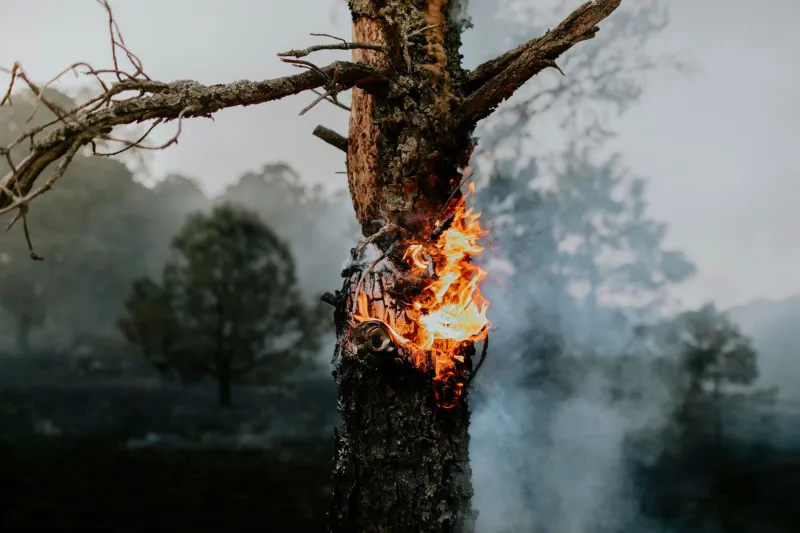
When Staying Rooted Becomes Standing Still: The Natural Science of Knowing When to Move On
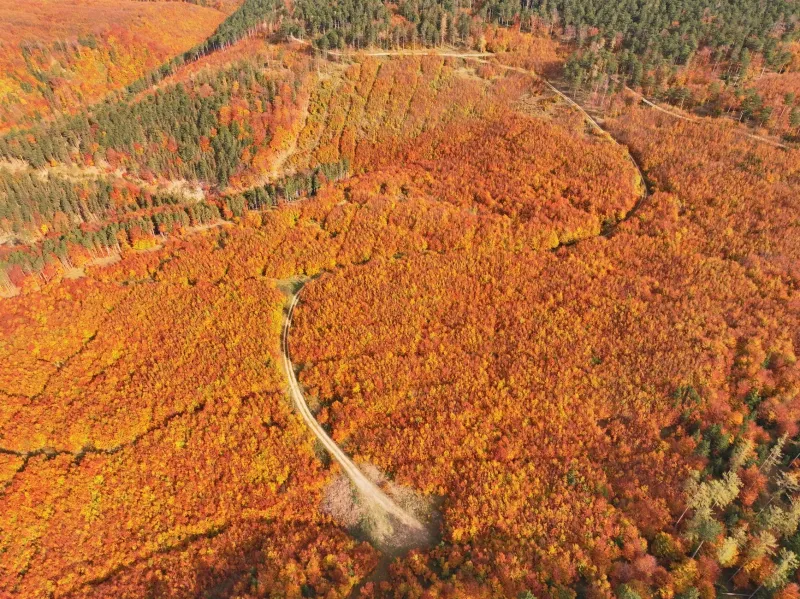
There's a particular kind of discomfort that doesn't announce itself loudly. It doesn't show up as a dramatic crisis or a single breaking point. It creeps in slowly — like a season changing — until one day you look around at the life you've carefully built and realize: this place no longer fits me the way it used to.
Ecologists call what happens next succession. It's the process by which an ecosystem transforms over time — not because something went wrong, but because that's exactly what living systems do. A bare patch of disturbed earth doesn't stay bare. Pioneer plants move in first: scrappy, fast-growing, tolerant of harsh conditions. They stabilize the soil, create shade, and in doing so, make the environment hospitable for species that couldn't have survived there before. Eventually, those newcomers crowd out the pioneers entirely. The pioneers did their job. Now it's time for something new.
Here's the part nobody talks about enough: the pioneers don't fail. They complete.
The Forest Doesn't Apologize for Changing
Succession is one of ecology's most fundamental truths, and it's also one of the most quietly radical ideas you can apply to your own life. Every stage of an ecosystem serves a purpose. Every stage also has an endpoint.
In American culture, we tend to treat longevity as the ultimate measure of success — in relationships, careers, communities, even ZIP codes. We celebrate the couple married for 50 years, the employee with decades at the same company, the family that never left the hometown. And there's real beauty in that kind of rootedness. Stability matters. Continuity matters.
But ecological succession reminds us that staying and thriving aren't always the same thing. Sometimes the most alive thing a living system can do is change its composition entirely.
Pioneer Species Don't Last — And That's the Point
Take dandelions. Everyone's got a complicated relationship with them, but ecologically speaking, they're geniuses. They colonize disturbed ground fast, hold soil together, and provide early food for pollinators. They're built for instability. The problem? Once a meadow matures and taller grasses take over, dandelions lose their edge. The conditions that made them perfect pioneers are exactly the conditions they helped eliminate.
A lot of us are dandelions in at least one chapter of our lives.
Marcus, a 47-year-old who spent his thirties building a scrappy tech startup in Austin, describes the feeling this way: "I was exactly the right person for that company when it was chaotic and undefined. I loved the uncertainty. Then we scaled, things got structured, and I started realizing — I wasn't energized anymore. I was just... familiar."
He stayed four more years past that realization. "I kept thinking loyalty meant staying. But I was taking up space that someone else — someone who actually thrived in that environment — could have used."
He eventually left to consult for early-stage companies. Back in the pioneer stage. Back where he was built to be.
When the Canopy Closes In
Succession ecologists talk about "canopy closure" — the point at which a maturing forest's upper layer of trees grows dense enough to block sunlight from reaching the forest floor. Species that needed open light to survive can no longer do so. The environment itself has become inhospitable to the very things that helped build it.
This happens in human communities too. Neighborhoods gentrify and price out the artists who gave them character. Social circles calcify around shared history until new ideas feel unwelcome. Organizations develop cultures so entrenched that the innovators who built them start to feel like outsiders.
Denise, a community organizer from Detroit who spent fifteen years building a neighborhood association from nothing, hit her own version of canopy closure around year twelve. "The thing I built had gotten successful enough that it didn't need me the way it used to. And the people who joined later — they had a different vision for what it should become. That's not bad. That's growth. But it meant my role had to change."
She stepped back from leadership and started mentoring organizers in other neighborhoods. "I had to stop mistaking the organization for my identity," she says. "The forest kept growing. I just needed to find where I fit in the next stage of it."
The Difference Between Roots and Anchors
Here's where it gets philosophically thorny, because Big Tree Life is fundamentally about rootedness — about depth, about staying connected to something larger than yourself. So how do you reconcile that with the idea that sometimes you need to uproot?
The distinction worth making is between roots and anchors.
Roots are living. They grow, branch, seek water and nutrients, respond to their environment. A tree's root system isn't static — it's constantly extending, dying back, rerouting. Roots are dynamic by nature.
Anchors are fixed. They hold things in place regardless of conditions. They don't grow. They don't respond. They just hold.
When we cling to a career, a community, or a version of ourselves out of fear or familiarity rather than genuine fit, we've stopped being rooted and started being anchored. And an anchored tree, when the storm comes, doesn't bend. It breaks.
Real rootedness — the kind that sustains you across decades — requires knowing when your roots need to reach somewhere new.
Reading Your Own Succession Signals
Ecologists identify succession stages partly by looking at what's growing and partly by looking at what's stopped growing. Both are data.
Some questions worth sitting with:
- Are you energized by the challenges in front of you, or just accustomed to them? Familiarity and aliveness are not the same thing.
- Is your presence in this community, career, or relationship still generative? Are you still contributing something meaningful, or have you become more of a fixture than a force?
- What would need to grow here that can't, because you're occupying the space? Sometimes the most generous thing we can do is step aside and let the next stage begin.
- What pioneer conditions are calling to you? Restlessness, curiosity about something new, a pull toward uncertainty — these aren't signs of ingratitude. They might be your ecology telling you it's time.
None of this means abandoning commitment or running from difficulty. Genuine hard seasons — grief, struggle, rebuilding — are part of every ecosystem. You don't succession your way out of those. You move through them.
But there's a difference between hard and stagnant. Between challenged and calcified.
Seeding Forward
In late-stage forests, the trees that will shape the next generation are already growing in the understory — small, patient, waiting for a gap in the canopy. When a mature tree finally falls, light floods in and those understory seedlings explode upward. The fallen tree doesn't disappear, either. It becomes a nurse log, feeding new growth for decades.
That's the model. Not abandonment. Not erasure. Transformation into something that feeds what comes next.
The people who navigate major life transitions most gracefully tend to share one quality: they've made peace with the idea that completing a chapter isn't the same as failing it. They've learned to read the signals their own ecosystem sends them. And when the conditions shift, they shift with them — not frantically, but deliberately, like a forest that's been doing this for ten thousand years.
You were never meant to be the same ecosystem forever. The question is whether you're paying enough attention to know which stage you're in right now — and whether you're honest enough with yourself to act on what you find.