Grow Where the Light Is: What Forest Canopies Teach Us About the Company We Keep

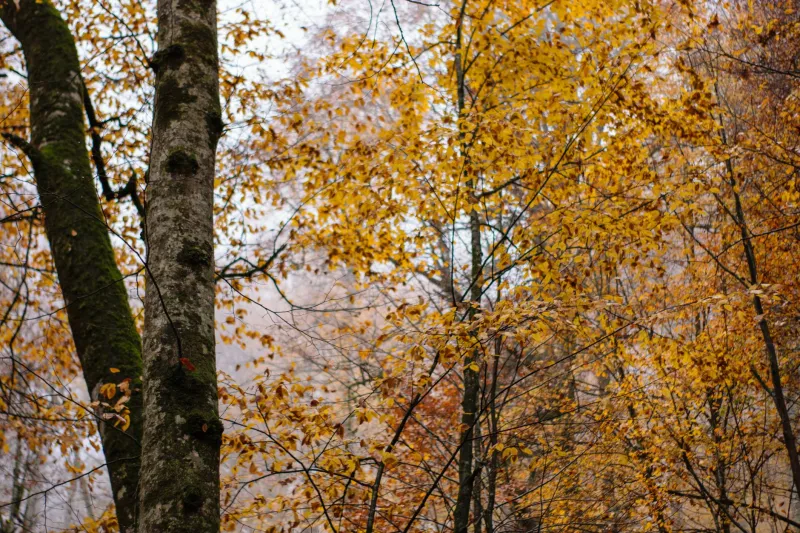
Walk into an old-growth forest and you'll notice something almost immediately. The tallest trees aren't out there doing it alone. They're clustered together, canopies interlocked, root systems quietly sharing nutrients beneath the soil. The ones that grow tallest tend to grow together, pulling each other upward toward the light.
Now think about the people in your life. The ones who energize you versus the ones who quietly drain you. The group that makes you want to run another mile, learn another skill, try another thing — versus the one where you mostly just vent and scroll and stay stuck.
Turns out, the forest isn't just a metaphor. It's basically a blueprint.
The Biology Behind Who You Become
Researchers have a term for it: behavioral contagion. It sounds like something you'd catch on a subway, but it's actually one of the most powerful forces shaping your daily life. Studies out of Harvard and the University of California San Diego have shown that everything from happiness and obesity to smoking habits and generosity spreads through social networks — sometimes up to three degrees of separation away. That means your habits are being influenced by people you've never even met, simply because they're connected to your friends.
Nicholas Christakis, a physician and sociologist at Yale, has spent decades mapping these invisible social currents. His conclusion? Your social network is a living organism, and its health directly affects yours. When the people around you are thriving — exercising regularly, managing stress, pursuing meaningful goals — your own brain starts picking up those signals. Mirror neurons fire. Habits shift. Your baseline for what feels normal quietly rises.
This isn't willpower. It's biology. And it's incredibly good news, because it means you don't have to white-knuckle your way to a better life. You just have to find the right canopy.
What a Thriving Canopy Actually Looks Like
A thriving canopy isn't a group of perfect people with perfect lives. That's a highlight reel, not an ecosystem. What you're looking for is something more honest — a community where growth is the shared direction, even if everyone's moving at a different pace.
Think about a Saturday morning running club at a local park. Nobody's an Olympian, but everybody shows up. They cheer each other through the hard miles. They celebrate the person who just ran their first 5K as loudly as the one training for a marathon. That's a canopy.
Or consider a small business owner who joins a local entrepreneurship group in her city. She's not there because everyone's already successful. She's there because the room is full of people who are trying — who talk openly about failure and pivots and what they're learning. Within six months, her own business decisions are sharper. Her risk tolerance has expanded. She didn't take a class. She just stood in the right light.
Hobby communities work the same way. Pottery studios. Community gardens. Amateur astronomy clubs. Recreational soccer leagues. These aren't frivolous social activities. They're ecosystems, and depending on their culture, they can either lift you or level you off.
How to Spot a Canopy Worth Joining
Not every group that looks healthy actually is. Some communities are thriving in their own insular loop, resistant to new growth. Others are built on comparison and competition rather than collective elevation. Here's how to tell the difference before you commit your time.
Watch how they talk about outsiders. A genuinely thriving community tends to be curious and welcoming, not defensive or cliquey. If the vibe is more "exclusive club" than "open forest," keep walking.
Notice what they celebrate. Do people get recognized for effort and progress, or only for results? Communities that celebrate the process tend to create safer conditions for growth — which means you're more likely to actually try things.
Pay attention to your energy after. This is the simplest test. After spending time with this group, do you feel more energized and motivated, or subtly deflated? Your nervous system knows before your brain catches up.
Look for reciprocity. Healthy ecosystems give and take. If a community is all about one person's shine or one type of achievement, the nutrients aren't circulating evenly.
Building Your Own Canopy When You Can't Find One
Sometimes the right community doesn't exist yet in your corner of the world. That's okay. Trees don't wait for a perfect forest — they put down roots and start creating conditions for others to grow nearby.
Start small. Invite two or three people in your life who embody the energy you want more of. Make it regular and low-pressure — a monthly hike, a book swap, a Sunday morning coffee with no agenda except honest conversation. Over time, those connections deepen and expand. Others are drawn in. A canopy forms around an intention you planted.
Online communities can supplement this, but they rarely replace the physiological benefits of in-person connection. Research consistently shows that face-to-face interaction triggers oxytocin and stress-regulating hormones in ways that digital interaction simply doesn't replicate. Use the internet to find your people, then get into the same physical space with them as often as you can.
The Root System You Can't See
Here's the part that doesn't get talked about enough. When you join a thriving canopy, you don't just receive — you contribute. Your presence changes the ecosystem too. The nervous system regulation, the mirror neuron activation, the behavioral contagion — it flows in every direction.
Which means the question isn't only "Who should I surround myself with?" It's also "What kind of canopy am I contributing to?"
Are you the person who shows up consistently? Who celebrates others without keeping score? Who shares what you're learning even when it's messy? That's not just good character. That's ecological responsibility. Because in a healthy forest, every tree matters to the whole.
The science is clear. The people you spend real, consistent time with are literally shaping your brain chemistry, your habits, your health outcomes, and your sense of what's possible. That's not a small thing. That's everything.
So find your canopy. Grow toward the light — together.