Growing Rings, Not Speed: The Quiet Revolution of Slow, Steady Personal Growth
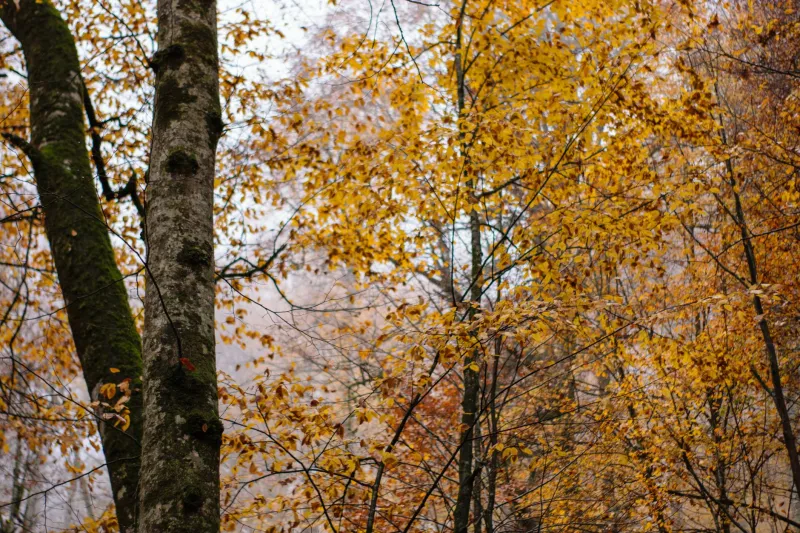
If you've ever cut open a tree stump, you know the story is all in the rings. Each one represents a full year—drought or rainfall, harsh winter or gentle spring. The tree didn't rush. It didn't skip ahead. It just kept growing, layer by layer, until it became something that could withstand almost anything.
A lot of Americans are starting to look at their own lives the same way.
For the better part of a decade, hustle culture ran the show. Rise and grind. Sleep when you're dead. Your worth equals your output. But something has shifted. Quietly, persistently—kind of like a tree root working through concrete—people are pushing back. They're trading the sprint for the long game, and they're calling it everything from "slow living" to "intentional growth" to just plain sanity.
The Burnout That Started the Conversation
You don't have to look hard to find the breaking point. According to a 2023 report from the American Psychological Association, nearly 60% of US adults reported feeling overwhelmed by the pace of their daily lives. Burnout, once considered a corporate buzzword, has become a full-blown public health conversation.
Dr. Renata Flores, a neuroscientist based in Chicago who studies habit formation and long-term behavior change, says the cultural obsession with speed actually works against the brain's natural learning rhythms.
"The brain builds durable skills and emotional resilience through repetition over time," she explains. "When we're constantly chasing the next milestone or optimizing every hour, we're not giving neural pathways the chance to deepen. We get wide, but never deep."
That metaphor hits differently when you think about what makes a tree strong. It's not the height. It's the root system.
What Slow Growth Actually Looks Like
For Marcus Webb, a 34-year-old electrician in Nashville, the shift started when he quit his second side hustle.
"I was doing freelance work on top of my full-time job, taking online courses, trying to build a 'personal brand,'" he says, laughing a little at himself now. "I was exhausted and honestly not getting better at anything. I was just... scattered."
He decided to spend a full year focused on one thing: becoming genuinely excellent at woodworking. Not to sell it. Not to post about it. Just to learn.
"By month four, I noticed I was calmer at work. More patient with my kids. I think having one thing I was slowly getting good at gave me this weird sense of stability."
That stability Marcus describes is something life coach and author Priya Anand hears about constantly from her clients across the country.
"People come to me thinking they need a better productivity system," she says. "What they usually need is permission to stop measuring themselves by speed. Progress doesn't have to be visible every week to be real."
Priya often uses the analogy of compound interest with her clients—not financial, but personal. Small, consistent investments in a skill, a relationship, or a habit accumulate quietly until one day you look up and realize how far you've come.
The Science of Gradual
Dr. Flores points to research on neuroplasticity to back this up. The brain's ability to rewire itself is most effective when new behaviors are practiced consistently over extended periods—not crammed into intense short bursts.
"We've romanticized the breakthrough moment," she says. "The overnight success, the sudden transformation. But that's not how lasting change works neurologically. What looks like a breakthrough is almost always the visible tip of a very long iceberg of slow, unglamorous work."
This tracks with what researchers in behavioral psychology call the "plateau effect"—the frustrating phase where you're putting in effort but not seeing obvious results. Most people quit here. But those who push through often find that the plateau was actually where the deepest learning happened.
It's not unlike a tree's dormant winter months. Nothing visible is happening above ground. But underground, the roots are spreading, strengthening, preparing for the next season of growth.
Redefining What Success Looks Like
One of the more interesting dimensions of this movement is how it's changing the way people talk about achievement—especially online.
There's a growing community of creators and everyday folks on platforms like Instagram and Substack who document slow, unglamorous progress. A woman in Vermont who's been learning to play piano for three years and still isn't great at it. A retired teacher in Arizona who started running at 62 and logs every single slow mile. A dad in Minnesota who's been building a backyard shed for two summers and isn't in any hurry to finish.
These aren't failure stories. They're something different—an honest accounting of what growth actually feels like from the inside.
"I think people are hungry for realness," says Priya. "We've been sold so many transformation stories that skip the middle part. But the middle part is where you actually become someone."
How to Start Thinking in Rings
If the slow growth mindset sounds appealing but you're not sure where to start, the entry point is simpler than you might think.
Pick one thing to go deep on. Not three things. One. A skill, a relationship, a creative practice, a physical discipline. Give it a real season of your attention.
Measure in months, not weeks. Resist the urge to evaluate yourself too frequently. Trees don't grow rings overnight. Check in quarterly rather than obsessively.
Celebrate invisible progress. Acknowledge the days you showed up even when nothing seemed to happen. That's often where the real work lives.
Find people who are playing the long game. Community matters enormously here. If everyone around you is chasing speed, it's hard to stay grounded in patience.
Get outside. Seriously. Spending time around old trees—in a park, a forest, even a well-established neighborhood—has a way of recalibrating your sense of time. These things have been here longer than your to-do list. That perspective is free and available everywhere.
The Strongest Things Take the Longest
There's a reason old-growth forests feel sacred. The trees there aren't just tall—they're dense, complex, interconnected, capable of weathering storms that would flatten younger stands. That didn't happen fast. It happened faithfully, season after season, ring after ring.
Americans are starting to want that for themselves. Not the flashy sprint to the finish line, but the slow accumulation of something real. A life that's not just impressive from the outside, but genuinely strong at the core.
And honestly? That sounds like the most worthwhile kind of growth there is.