Putting Down Roots When the Ground Keeps Shifting: A Guide to Finding Your People
Somewhere between your third city in five years and your fourteenth Zoom happy hour, it's easy to feel like belonging is something that happens to other people. The kind of thing you had in college, or maybe in your hometown, before life got complicated and everyone scattered.
But here's the thing about roots: they don't require permanent ground. They require intention.
Across the country, in cities and small towns alike, people are actively rebuilding something that the last decade quietly dismantled—genuine, textured, show-up-for-each-other community. And the ways they're doing it are more creative, more grounded, and more hopeful than you might expect.
The Loneliness We're Not Talking About Enough
The US Surgeon General made waves in 2023 when he declared loneliness a public health epidemic. The numbers behind that declaration are sobering: roughly half of American adults report measurable feelings of isolation, and that figure has been climbing steadily for years—long before the pandemic accelerated things.
What's tricky about modern loneliness is that it often doesn't look lonely from the outside. You can have 800 followers, a full work calendar, and a group chat that never stops pinging, and still feel like nobody really knows you.
"There's a difference between contact and connection," says Dr. Simone Tran, a community psychologist based in Denver who studies social belonging. "We've optimized for contact—more messages, more faces on screens, more digital interaction. But connection requires something slower and more vulnerable. It requires showing up repeatedly, in context, over time."
Repeatedly. In context. Over time. Sound familiar? It's basically the same formula as growing a tree.
Why Place Still Matters (Even When You Move a Lot)
One of the more counterintuitive insights from researchers who study belonging is that physical place still plays a huge role—even for people who don't stay put for long.
Being anchored to a specific location, even temporarily, gives community something to grow around. A neighborhood coffee shop you visit every Saturday. A trail you run three mornings a week. A farmers market where the same vendors recognize your face.
"Shared geography creates shared rhythm," Dr. Tran explains. "And shared rhythm is one of the oldest foundations of human bonding. When you move into a place and start participating in its routines, you're not just running errands. You're becoming part of a living ecosystem."
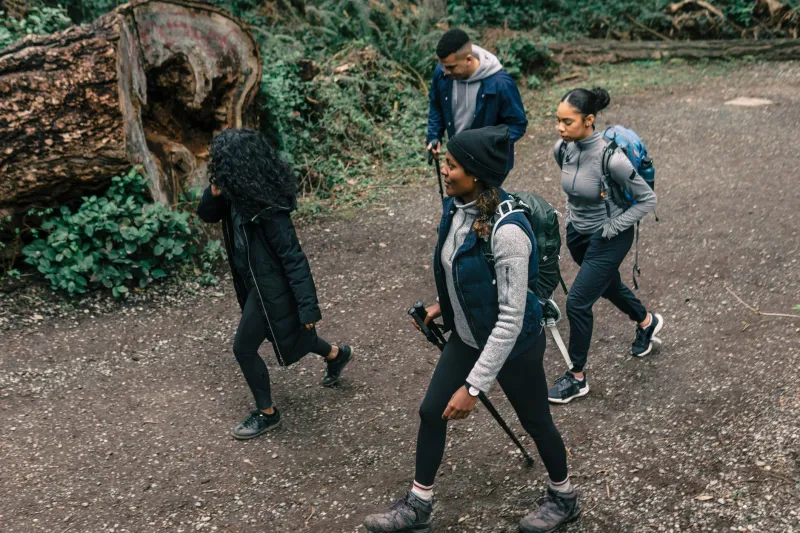
This is something the nature-based community movement has understood intuitively. Groups organized around outdoor activities—trail running clubs, community gardens, birdwatching circles, local hiking meetups—tend to generate unusually strong social bonds. Part of it is the shared physical experience. Part of it is the natural conversation starter that the outdoors provides. And part of it is simply that being outside together, moving through the same landscape, creates a kind of quiet intimacy that's hard to replicate on a couch.
Nature as a Doorway Into Community
If you're new to an area or rebuilding your social world from scratch, nature-based groups are one of the most underrated entry points available.
Outdoor Afro, a national organization celebrating Black connections to nature, has chapters in cities across the US and runs events ranging from hiking trips to stargazing nights. The Sierra Club's local chapters host regular outings in nearly every major metro area. Apps like Meetup are full of hiking groups, community garden volunteer days, and outdoor yoga gatherings that welcome newcomers without a lot of social pressure.
The shared focus on something outside yourself—a trail, a garden bed, a bird sighting—takes the edge off the awkwardness of meeting strangers. You're not just standing around trying to make conversation. You're doing something together, which is how humans have bonded since the beginning.
"Activity-based connection is incredibly effective," says Dr. Tran. "It gives people a reason to be together that isn't inherently social, which paradoxically makes the social part easier."
Rituals Are the Root System of Community
Ask anyone who's part of a tight-knit group what makes it work, and you'll almost always hear some version of the same answer: we do this thing, regularly, and it's ours.
It might be a weekly Sunday dinner that's been going for six years. A monthly book club that's drifted far from books but stayed stubbornly loyal to showing up. A neighborhood bonfire every first Friday of October. A text thread that sends a photo of the same park bench every spring.
These rituals aren't just cute traditions. They're functional. Repeated shared experiences build what psychologists call "relational memory"—a layered sense of history between people that deepens trust and creates a felt sense of belonging over time.
If you're trying to build community rather than just find it, consider starting a ritual rather than waiting for one to appear. It doesn't need to be elaborate. It just needs to be consistent.
Mentorship as a Two-Way Root
One of the most overlooked community-building tools is mentorship—and not just in the professional sense.
Finding someone who's been where you are, or becoming that person for someone younger, creates a specific kind of belonging that peer relationships don't always offer. There's a depth to it, a sense of lineage and continuity, that can feel profoundly grounding.
Organizations like Big Brothers Big Sisters, local SCORE chapters for small business mentorship, and community-based skill-sharing networks exist in most US cities and are chronically in need of both mentors and mentees. The act of investing in someone else's growth—or accepting that investment from another person—is one of the most direct routes to feeling genuinely rooted in a community.
Practical Steps for Right Now
If all of this sounds good but you're not sure where to actually begin, here are a few concrete moves that don't require a total life overhaul:
Say yes to one outdoor group activity this month. Check Meetup, Facebook Events, or your local parks and recreation department. Show up even if it feels awkward. Plan to go twice before deciding it's not for you.
Identify your third place. Home is first. Work is second. Your third place is the community space where you're a regular—a coffee shop, a gym, a library, a diner. If you don't have one, start building it by showing up to the same place at the same time each week.
Start something small and invite one person. A monthly walk. A biweekly dinner. A standing phone call. You don't need a group. You need a start.
Volunteer locally. Nothing builds community faster than working alongside people toward a shared purpose. Food banks, trail maintenance crews, community gardens, and neighborhood associations are all hungry for hands.
Be the one who remembers. Text someone on their birthday. Follow up after a hard week they mentioned. Check in when you haven't heard from someone in a while. In a distracted world, the people who remember are the people everyone wants to be close to.
Belonging Is Built, Not Found
Here's the honest truth that nobody really wants to hear: belonging rarely falls into your lap after childhood. As adults, in a mobile, fragmented, screen-saturated culture, it has to be constructed—deliberately, patiently, and with a willingness to feel a little awkward along the way.
But the other honest truth is that it's absolutely possible. The roots of community, once established, are surprisingly resilient. They can survive moves, job changes, hard seasons, and long distances—as long as someone keeps tending them.
You don't have to find the perfect place or the perfect people. You just have to start showing up to something real, and keep showing up, until the ground beneath you starts to feel like yours.
That's how roots work. And it's how belonging works too.