The Underground Economy: How Your Quietest Relationships Are Quietly Building Your Career
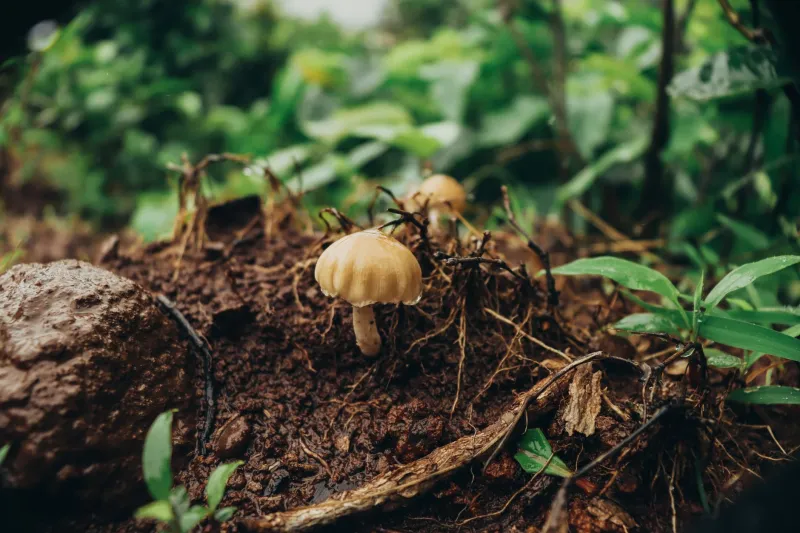
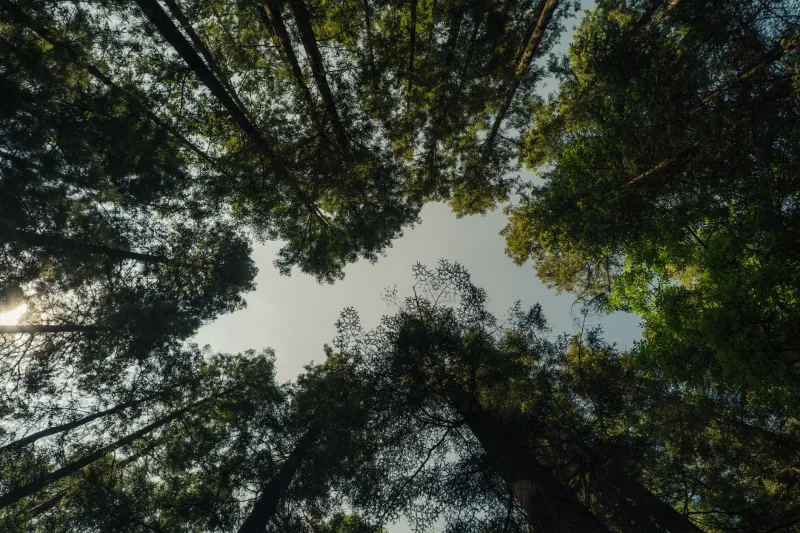
If you've ever stood in an old-growth forest — maybe somewhere in the Pacific Northwest or the Appalachians — and felt like the trees were somehow communicating, you weren't wrong. Beneath your feet, an intricate web of fungal threads called mycorrhizae was threading through the soil, linking root systems across hundreds of feet, passing phosphorus here, water there, warning signals when something goes wrong. The trees don't advertise this. You can't see it. But take that network away, and the whole forest starts to collapse.
Your professional life has the exact same architecture. And most people are completely ignoring it.
What Mycorrhizae Actually Do (And Why It Matters for Your Monday Morning)
Here's the quick biology lesson, because it's worth knowing. Mycorrhizal fungi attach to plant roots and extend their reach far beyond what the roots could ever manage alone. In exchange for sugars the tree produces through photosynthesis, the fungi pull in water and nutrients from soil pockets the roots can't access. It's a trade. A genuine, mutually beneficial trade that neither party could replicate on their own.
What makes this fascinating — and what keeps researchers at places like the University of British Columbia genuinely excited — is that this isn't a one-to-one relationship. One fungal network can connect dozens of trees simultaneously. A Douglas fir and a paper birch, species that seem like competitors, are often sharing resources through the same underground thread. The forest isn't a collection of individuals fighting for sunlight. It's a cooperative economy running on trust and reciprocity.
Sound familiar? It should.
The Networking Advice You Were Given Was Missing the Point
American career culture has a complicated relationship with networking. We've been told to work the room, collect business cards, build our LinkedIn connections, and follow up within 24 hours. There's an entire industry built around turning relationship-building into a transaction — something you do to people rather than with them.
And it mostly doesn't work. At least not the way we hope.
Research consistently shows that it's weak ties — not your closest colleagues or your best friends — that are most likely to surface a job opportunity or open an unexpected door. Your tight inner circle mostly knows what you already know. But that acquaintance from a conference three years ago, the former coworker you stayed in genuine contact with, the person you helped debug a project with no expectation of return? Those are your mycorrhizal threads. They reach into soil you can't access yourself.
The difference between a transactional network and a mycorrhizal one is mutual benefit. Real exchange. The fungal thread doesn't just take from the tree — it gives back something the tree genuinely needs. When your professional relationships operate the same way, something shifts. People remember you differently. They think of you when things come up. They send opportunities your way not because they owe you, but because the connection itself has become valuable to both of you.
Building Your Own Fungal Network (Without Feeling Gross About It)
So what does this actually look like in practice? A few things worth sitting with:
Start with genuine curiosity, not agenda. The mycorrhizal network didn't set out to become an infrastructure project. It grew because individual organisms were doing what they were built to do — seek resources, share surplus, respond to need. When you approach people from a place of real interest rather than a calculated ask, the interaction lands differently. Ask what someone is working on. Actually listen. Follow up on something they mentioned months ago. It costs almost nothing and it builds something real.
Invest in the quiet connections. The people you went to grad school with. The former manager who moved to a different industry. The person in your neighborhood who works in a field completely unrelated to yours. These are the threads that reach into unfamiliar soil. Don't let them go dormant just because there's no immediate ROI visible. Stay in touch. Share something useful occasionally. Show up when they post something worth celebrating.
Give before you need to receive. Healthy mycorrhizal networks are built on exchange that happens continuously, not just in moments of crisis. Make introductions. Share resources. Write the LinkedIn recommendation without being asked. Offer your expertise to someone who could use it. When you do eventually need something — and you will — the network is already there, already healthy, already primed to respond.
Let the network be weird and nonlinear. One of the most counterintuitive things about mycorrhizal systems is that resources don't always flow in predictable directions. A tree that's thriving might send nutrients toward a struggling neighbor — not because it calculated the benefit, but because the network routes that way. Some of your best career moments will come from connections that don't make obvious sense on paper. The podcast host you helped with a guest recommendation. The neighbor who turned out to know your next boss. Don't filter your network too tightly. Let it sprawl a little.
Resilience Is a Network Property, Not a Personal One
Here's the part that doesn't get talked about enough in career advice circles: resilience.
When a tree in a healthy mycorrhizal forest gets stressed — drought, disease, a bad season — the network can actually route support toward it from neighboring trees. The system compensates. It buffers. Individual trees in isolated soil, without those fungal connections, just... struggle alone.
The same dynamic plays out in careers. People with rich, genuine professional networks move through disruption differently. Layoffs sting less when three people immediately reach out with leads. Career pivots feel less terrifying when you have relationships across multiple industries. Even the psychological experience of professional setbacks is softer when you're embedded in a community that knows your work and values your presence.
This isn't about having famous mentors or impressive connections. It's about depth and reciprocity across a wide, quietly tended web of relationships. The underground economy that nobody sees but everybody benefits from.
The Long Game Looks Like a Forest
Forests don't build their underground networks quickly. Mycorrhizal relationships develop over years, sometimes decades, becoming more complex and more resilient with time. The oldest, most connected trees in a forest — the ones researchers sometimes call "mother trees" — have fungal networks that took generations to establish. And those networks are exactly what make the whole forest more capable of surviving what comes next.
Your career is a long game. The relationships you tend today, with no particular expectation attached, are the threads that will hold you up in years you can't predict yet. Not because you planned it that way. But because that's just how living systems work.
Grow the network. Trust the process. The underground economy is already running — you just have to plug in.