What Your Weekend Hobby Is Quietly Doing to Your Career
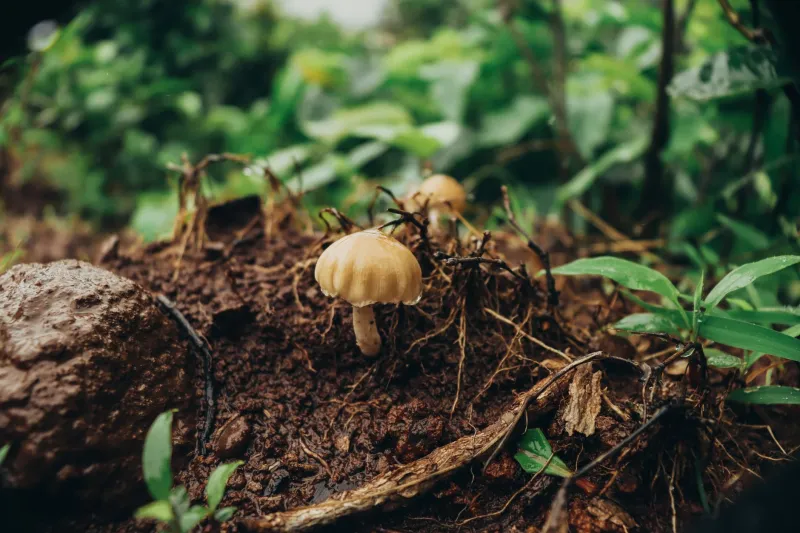
Somewhere right now, a forest is conducting business. Not the kind with conference calls or business cards, but a genuine exchange of resources — carbon, nitrogen, water, information — moving silently through a web of mycorrhizal fungi stretched beneath the soil. Trees that look completely separate above ground are, beneath it, deeply entangled. They share what they have. They prop each other up. And the whole system runs through channels that most people never think to look for.
Your life works the same way. Specifically, your hobbies do.
We've been trained to think of personal interests as separate from professional life. You clock out, you go home, you do your thing — and those two worlds don't mix. But that's not actually how human connection works. And it's definitely not how the most interesting careers get built.
The Problem With Traditional Networking
Let's be honest about something: traditional networking is exhausting and, for most people, pretty ineffective. The conference happy hour where everyone's scanning the room for someone more useful to talk to. The LinkedIn message that's clearly a template. The "let's grab coffee sometime" that never materializes.
These interactions feel transactional because they are transactional. You're essentially showing up to a nutrient exchange and announcing what you want before you've contributed anything. Trees don't work that way. Mycorrhizal networks are built on long, slow, reciprocal relationships — years of give-and-take before the big moments of support happen.
Your hobbies, it turns out, are where that slow-build actually occurs.
How a Gardening Club Changed Someone's Career Trajectory
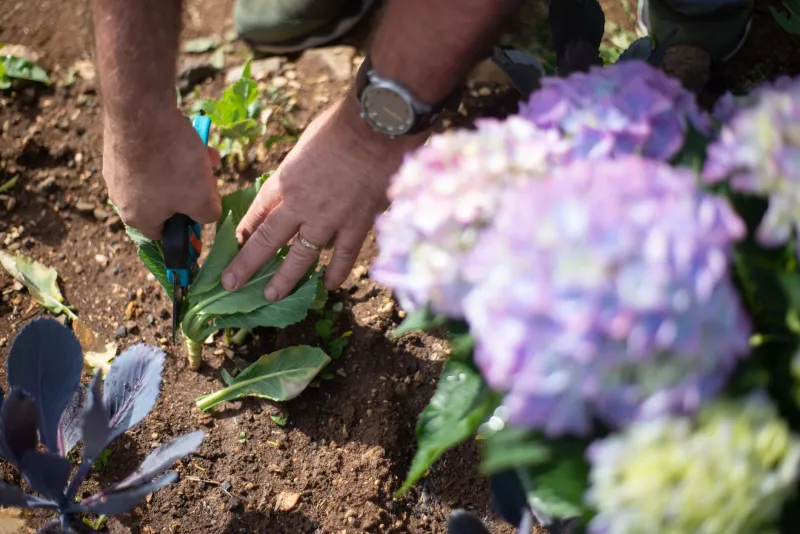
Consider the kind of story that almost never makes it into a business magazine: A mid-level project manager in Denver starts showing up to a community garden plot on weekend mornings, mostly because she needed something to do that didn't involve a screen. She meets a landscape architect, a retired soil scientist, and a woman who runs a small urban agriculture nonprofit. They talk about compost. They talk about drought-resistant native plants. They talk about their kids and their commutes and their weird dreams.
Eighteen months later, that project manager is consulting for the nonprofit. Not because she networked. Because she showed up, got her hands dirty, and let actual relationships grow at their natural pace.
This isn't a rare fluke. It's a pattern — one that researchers who study social capital have been documenting for years. The connections formed around genuine shared interest are structurally different from professional contacts. They carry more trust, more goodwill, and more willingness to go out on a limb for someone.
The Mycorrhizal Logic of Personal Interests
Here's what makes hobby-based connections so powerful, and why the mycorrhizal metaphor actually holds up scientifically.
Mycorrhizal fungi don't just passively transport nutrients — they actively seek out new host plants and create pathways between organisms that wouldn't otherwise be linked. In a healthy forest, a single fungal network might connect hundreds of trees across multiple species. The network's value grows exponentially with each new connection.
Your hobbies do the same thing. A photography enthusiast connects with other photographers, sure — but also with gallery owners, magazine editors, conservation groups, tech companies building camera gear, and travel operators running photo tours. An amateur naturalist who posts observations on iNaturalist ends up in conversation with biologists, park rangers, science educators, and environmental lawyers. A person who joins a local trivia league meets bartenders, teachers, data analysts, and small business owners — people they'd never encounter in their professional silo.
Every genuine interest is a mycelium thread reaching into a completely different part of the forest.
Why 'Useless' Hobbies Tend to Be the Most Valuable
There's a specific category of hobby that career advisors tend to dismiss: the ones with no obvious professional application. Birdwatching. Amateur astronomy. Competitive puzzle-solving. Historical reenactment. Fermentation hobbyists who spend Sundays turning cabbage into kimchi.
These pursuits, because they carry zero professional pretense, attract people who are actually there for the thing itself. And that authenticity changes the social chemistry entirely.
When you're at an astronomy club meeting and someone asks what you do for a living, it's almost an afterthought — a footnote to the real conversation about Jupiter's moons. That low-stakes context is where people let their guard down, share real opinions, and make genuine impressions. It's where you find out that the quiet guy who always knows the best dark-sky viewing spots is a software architect who's been looking for exactly the kind of project you're working on.
The seemingly useless hobby turns out to be the most direct route to the conversation that actually matters.
Growing Your Network Without Trying to Grow Your Network
This isn't a call to strategically infiltrate hobby spaces for professional gain — that approach will backfire fast and honestly kind of misses the point. The whole value here comes from the genuine-ness of it.
What it is is permission to stop feeling guilty about the time you spend on things that don't appear on your resume. To recognize that the Saturday morning you spend at a native plant society meeting, or the Tuesday evenings you give to a community choir, or the weekends you lose to building furniture in your garage — these aren't time away from building your life. They are building your life, just through roots you can't see yet.
A few things that help this process along:
Show up consistently. Mycorrhizal networks don't form overnight. The value in hobby-based community comes from repeated presence over time. One visit to a rock-climbing gym doesn't build a network. Two years of showing up every Thursday does.
Let the conversation go wherever it goes. Resist the urge to steer toward professional topics. The connection forms in the shared interest. The professional relevance emerges later, naturally, when it's actually relevant.
Be generous with what you know. In the fungal world, the network survives because resources move in multiple directions. Share your knowledge, your contacts, your enthusiasm freely within your hobby community. That generosity is what makes the network worth being part of.
Follow the genuine pull. The most valuable connections come from the hobbies you'd do even if nothing professional ever came from them. Those are the spaces where you're most authentically yourself — and authenticity is the only thing that actually builds trust.
The Forest Was Already There
The mycorrhizal network beneath a mature forest took decades to develop. Trees that look like solitary giants are actually embedded in a community they couldn't survive without. And the entry point for every new seedling that gets to tap into that network? It's not strategy. It's roots.
You already have interests that matter to you. You already have things you do when nobody's watching and nothing's on the line. Those are your roots. And somewhere out there, underground, they're already touching something.
Stop treating your hobbies like guilty pleasures you need to justify. Start treating them like the network infrastructure they actually are.