Burn It Down to Build It Better: What Forest Fire Management Teaches Us About Career Reinvention
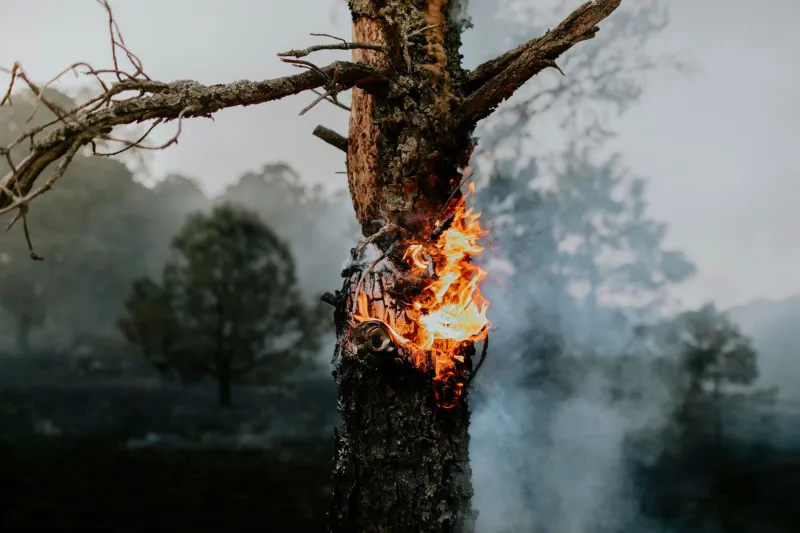
Every summer, land managers across the American West do something that looks, on the surface, completely insane. They set fire to perfectly healthy forests on purpose. They watch decades of accumulated brush, dead wood, and overgrown understory turn to ash — and they do it with intention, with maps, and with a deep understanding that what looks like destruction is actually the most powerful form of renewal available to them.
If you've been staring at your career lately and feeling like something isn't working — like the path that made sense five years ago now feels like a thicket you can't see through — this might be the most useful metaphor you'll ever encounter.
Why Forests Need Fire (And Why We've Forgotten That)
For most of American history, the default policy around wildfires was simple: put them out. Every single one. Fast. The thinking was intuitive — fire destroys, so less fire means less destruction. Smokey Bear built a whole career on that message.
The problem? Nature didn't agree. Without periodic low-intensity burns, forests accumulate what ecologists call "fuel load" — years of dead branches, dried leaf litter, and dense undergrowth that wouldn't normally survive a healthy fire cycle. When a spark eventually hits that kind of buildup, you don't get a manageable burn. You get an inferno. The catastrophic wildfires we see tearing through California and the Pacific Northwest today are, in part, the result of a century of suppressing the smaller fires that would have kept those landscapes in balance.
Prescribed burns fix this. A controlled fire, set deliberately under the right conditions, clears out the dead weight, releases nutrients back into the soil, and opens the forest floor to sunlight that couldn't penetrate the canopy before. Within a season, new growth explodes. Species that couldn't compete in the crowded old structure suddenly have room to thrive.
Sound familiar?
The Fuel Load Problem in Your Career
Most of us build careers the same way those forests accumulated their fuel load — incrementally, without ever stopping to clear anything out. We add skills, responsibilities, and commitments on top of old ones. We hold onto roles, client relationships, or professional identities that stopped serving us years ago because letting go feels risky. We keep the dead wood because at least it's familiar.
Over time, that accumulation creates its own kind of danger. Your schedule gets so packed with legacy obligations that there's no room for new opportunities to take root. Your professional identity gets so locked into what you've always been that pivoting feels impossible. The "safe" career starts to feel like a trap.
And then something external — a layoff, a market shift, a global pandemic — comes along and does the burning for you, without your permission, without your timing, and without any of the control that makes the difference between a prescribed burn and a catastrophe.
What a Strategic Career Burn Actually Looks Like
The professionals who seem to reinvent themselves most successfully aren't the ones who waited for the market to force their hand. They're the ones who learned to light their own fires — carefully, deliberately, and at a scale they could manage.
This doesn't always mean quitting your job or blowing up your entire professional life. Sometimes a prescribed career burn is much smaller:
Dropping a service line that's keeping you busy but not building toward anything. Freelancers and consultants often hold onto low-paying, high-maintenance clients long after those relationships stopped making sense, simply because the revenue feels safer than the uncertainty of replacing it. Letting one of those go — intentionally — creates the space and motivation to pursue better work.
Retiring a skill set you've outgrown. There's a version of you that was really good at something that no longer reflects where you want to go. Holding it up as a core part of your professional brand can actually work against you, signaling to the market that you're the old version of yourself. Burning that down — updating your LinkedIn, redirecting your portfolio, declining work in that lane — feels uncomfortable, but it's how you make room for the new identity to take hold.
Deliberately ending a career chapter before it ends itself. The cleanest pivots tend to come from people who decided to move on while things were still going well, rather than waiting until they had no choice. There's a real power in choosing your exit rather than being shown it.
The Counterintuitive Courage of Letting Things Go
Here's the part nobody tells you: a prescribed burn requires more nerve than just keeping the status quo. It's genuinely hard to walk away from something that's working okay, or to stop being the person everyone in your network expects you to be. The forest doesn't "want" to burn any more than you want to dismantle something you spent years building.
But the ecology of growth is stubborn about this. In a forest, the seeds of certain fire-adapted species — lodgepole pines, for instance — won't even germinate until they've been exposed to intense heat. The potential was always there, locked inside the cone, waiting for exactly the conditions that look like destruction from the outside.
You probably have a few of those locked seeds too. Ideas you've been sitting on, directions you've been curious about, versions of your career that feel too risky to pursue while the current structure is still standing. Sometimes those possibilities can only open up after the burn.
Starting Small, Burning Smart
If this is resonating, you don't have to torch everything at once. Prescribed burns are managed precisely because the goal is renewal, not ruin. A few places to start:
- Audit your time and energy. What are you doing out of habit or obligation that isn't moving you forward? That's your fuel load.
- Name what you're protecting. Usually, the things we're most reluctant to burn are the things most worth examining. Fear of losing a title, an income level, or a professional reputation often signals that those things have become identity anchors rather than actual goals.
- Set a controlled timeline. Give yourself a defined window — six months, a year — to phase something out while building what comes next. That's the "controlled" part of the burn.
- Tell someone. Prescribed burns have witnesses. Accountability makes the commitment real.
New Growth Always Follows
Every ecologist who studies post-fire landscapes will tell you the same thing: the recovery is faster and more vibrant than you'd expect. Within weeks of a prescribed burn, the charred ground starts pushing up new shoots. Wildflowers bloom in meadows that haven't seen sunlight in decades. The diversity of life that returns is often richer than what was there before.
Your career has that same regenerative capacity — but only if you're willing to make room for it. The old structure, as comfortable as it might feel, might be the very thing blocking the light.
Light the match. Carefully, intentionally, and on your own terms. The growth that comes after is worth it.