Less on the Branch, More in the Roots: What Happens When You Finally Stop Adding and Start Cutting
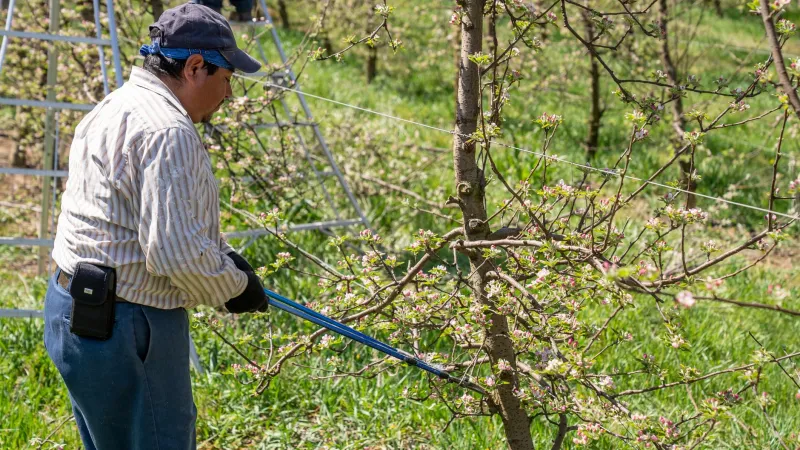
There's a moment every spring in orchards across the American Midwest when something strange happens. A farmer walks through rows of apple trees armed not with fertilizer or water, but with a pair of sharp loppers. Branch after branch hits the ground. Healthy-looking growth, gone. And then, a few weeks later, the tree explodes.
New shoots push out from places that were dormant for years. Fruit clusters form thicker and heavier than the season before. The tree, unburdened, redirects every bit of energy it had been spreading thin across dozens of competing branches into a focused, almost fierce surge of production.
This isn't magic. It's biology. And honestly? It might be the most useful productivity lesson most of us have never actually applied to our own lives.
Why Trees Don't Hoard Their Growth
Here's what's actually happening beneath the bark. When a tree carries too many branches, it has to divide its vascular resources — the water, sugars, and nutrients moving through its system — across an enormous surface area. No single branch gets enough. Growth slows. Fruit quality drops. The whole tree coasts along at a kind of mediocre steady state.
Pruning forces a redistribution. The tree's root system, which was already doing the heavy lifting underground, suddenly has fewer destinations to supply. So it sends that same energy — the same raw biological horsepower — into fewer, stronger channels. The result is what arborists call a "growth flush": rapid, vigorous new development that wouldn't have been possible while the tree was trying to sustain everything at once.
There's also a wound response at play. When a branch is cut cleanly, the tree activates repair mechanisms and growth hormones around the site. It's a little like how muscles grow stronger after being broken down at the gym. The cut itself becomes a signal: grow here, grow now, grow better.
The Human Version of the Growth Flush
Most of us are walking around as unpruned trees. We add commitments the way some people add browser tabs — with good intentions and a vague plan to deal with them later. A side project here. A standing obligation there. A habit we picked up three years ago that no longer fits who we're trying to become. We keep it all running because cutting anything feels like failure, or loss, or admitting we overreached.
But there's a different way to read it.
Take Marcus, a freelance graphic designer based in Austin who spent two years trying to grow his business by saying yes to everything. More clients, more platforms, more services offered. His revenue flatlined. His creative work felt stale. On the advice of a mentor, he did something that terrified him: he cut his client roster by more than half, dropped two of his three service offerings, and cleared two full days a week on his calendar that had previously been packed with calls and admin work.
Within four months, his average project value had nearly doubled. He had the bandwidth to pitch bigger clients. His design work — freed from the constant scramble — started winning awards. He hadn't added anything. He'd pruned.
This pattern shows up everywhere once you start looking for it. The novelist who finishes her book only after quitting her podcast. The startup founder who finally hits product-market fit six months after shutting down the company's secondary revenue stream. The marathon runner who posts a personal best the season after dropping down to three training runs a week instead of six.
The Myth That More Is Always More
American culture has a deep, almost reflexive love affair with addition. More hustle. More content. More networking. More optimization. The self-improvement industrial complex is basically one giant fertilizer company — always selling you something to pour on top of what you already have.
But trees don't work that way. And neither do people, if we're being honest.
The research on cognitive load is pretty clear: the human brain has a finite capacity for high-quality decision-making and creative output. Every active commitment — every open loop, every project running in the background of your mind — draws down on that capacity. It's not that you can't technically carry twenty priorities. It's that none of them will get the version of you that's actually capable of doing great work.
Pruning isn't about doing less because you're lazy or scared. It's about concentrating force. It's about making sure the energy your roots are already generating has somewhere powerful to go.
How to Actually Do This (Without Panic-Cutting Everything)
The fear most people have about pruning their lives is that they'll cut the wrong thing. And honestly, that's a reasonable concern. Bad pruning — cutting too deep, at the wrong time, without a clear intention — can stress a tree just as surely as neglect can.
A few things worth keeping in mind:
Start with the deadwood. Before you touch anything that's actively producing, look for the commitments that haven't borne fruit in a long time. The project you keep meaning to get back to. The obligation you fulfil out of guilt rather than purpose. These are the dead branches. They're not producing anything, but they're still drawing resources. Cut those first.
Prune toward light. Arborists talk about opening a tree's canopy to let sunlight reach the interior. Ask yourself what you're trying to let more of into your life — focus, creativity, rest, connection — and cut the things that are blocking it.
Give it a season. The growth flush after pruning doesn't happen overnight. Trees take weeks to redirect and respond. If you clear your plate in January, don't expect to feel the surge by February. Give yourself a full season to see what grows into the space you've created.
Resist the urge to refill immediately. This is the hardest part. The moment you create open space, something in the American brain wants to fill it with something new and productive-sounding. Don't. The space itself is the point. Let the roots do their work.
What the Cut Actually Signals
Maybe the deepest truth about pruning — for trees and for people — is what the act itself communicates. When you remove something, you're not just managing resources. You're making a declaration about what matters. You're telling your own system: this is where I want to grow.
Trees don't mourn the branches they lose. They don't second-guess the cut once it's made. They just redirect, respond, and reach.
There's something worth borrowing from that. Not recklessness — thoughtful, intentional subtraction. The kind that comes from actually knowing what you're growing toward, and being willing to let go of everything that's pulling in a different direction.
Your most productive season might not be waiting on the other side of a new habit or a better morning routine. It might be waiting on the other side of a clean, decisive cut.
Pick up the shears.